

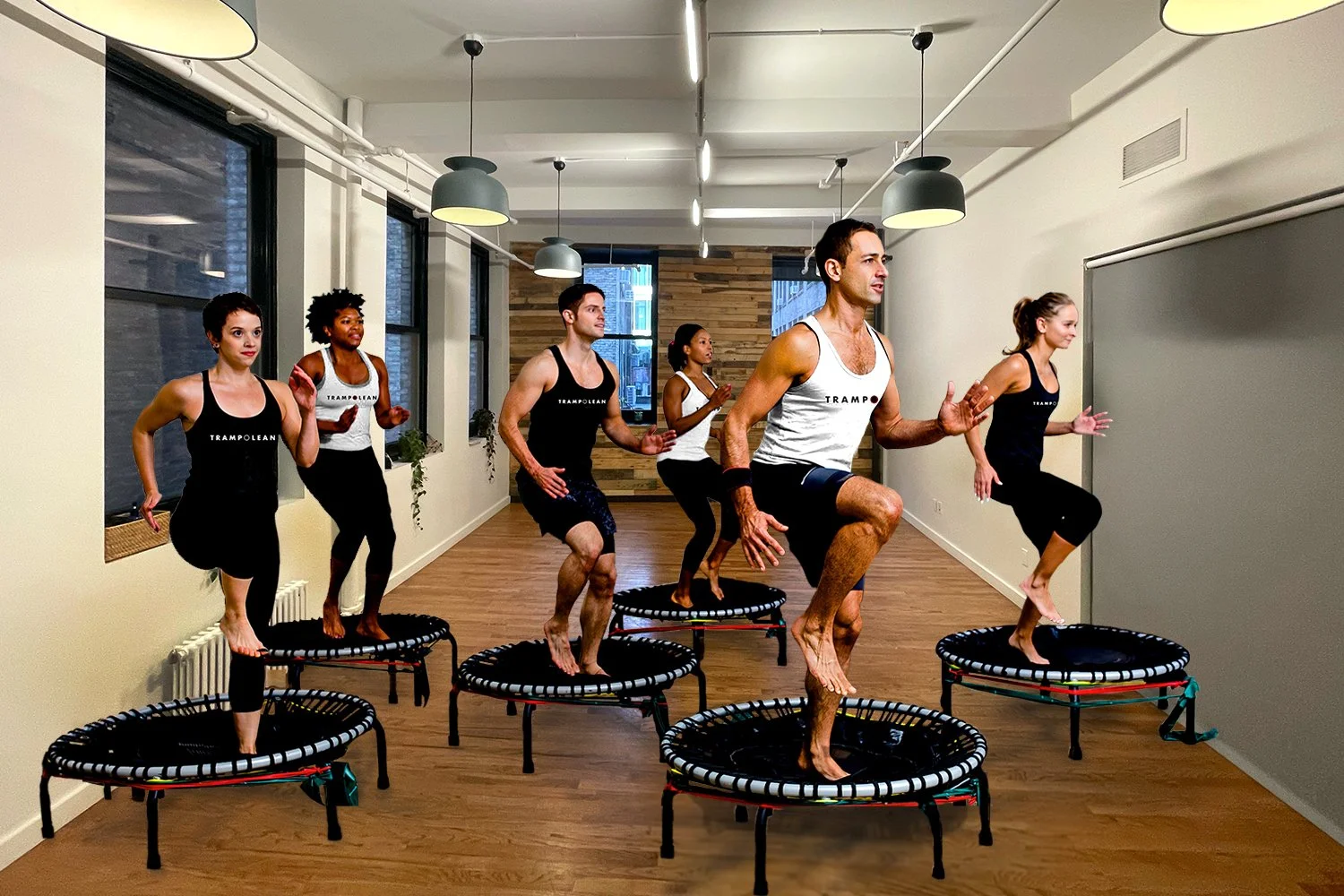
“Low impact” describes an aspect of how the body meets the exercise surface. It does not mean that the muscles and tendons of the lower leg are inactive. During a trampoline class Singapore workout, the mat may soften the sensation of contact, but the calves and Achilles tendons still help control the ankle, maintain rhythm and redirect the body through hundreds of repeated movement cycles.
This distinction matters because participants often judge workload by how harsh an exercise feels on contact. A rebound session can feel smoother than repeated jumps on a rigid floor while still creating meaningful local fatigue. Understanding that demand leads to better progression, more realistic weekly planning and fewer attempts to add intensity simply because the workout does not feel jarring.
Impact and Tissue Demand Are Different Variables
Impact is commonly associated with the rate and character of contact. Muscular and tendon demand depends on additional factors, including the force produced, how frequently it is repeated, the range used and the participant’s ability to maintain position.
The trampoline mat deforms under the feet, changing the contact compared with a hard surface. Yet the body must still stop the downward movement and prepare the next rebound. The calf complex contributes to ankle control, and the Achilles tendon transmits force between the calf muscles and the heel. This spring-like function is repeated throughout the session.
A smoother contact can therefore coexist with substantial work. The participant may not experience the sharp sensation associated with firm-floor jumping, but the lower legs can accumulate fatigue through repeated stabilisation and short recovery periods.
Why the Calves Work Even During Small Rebounds
Visible bounce height is only one part of the task. Small rebounds require the ankle to respond quickly to a surface that is continually moving. The calves help manage foot position and prevent each contact from becoming uncontrolled.
When cadence is high, the time available for this adjustment is short. Even if each individual rebound feels easy, the cumulative time under tension can become significant. This is similar to performing many submaximal repetitions. No single effort needs to be maximal for local endurance to become the limiting factor.
The lower legs may work harder when the participant stays high on the forefoot, grips with the toes, or uses an unnecessarily rigid ankle strategy. These habits can make the movement feel tense and may cause the calves to fatigue before the cardiovascular system is fully challenged. An instructor’s cue to use a more balanced foot contact or reduce range can redistribute effort without eliminating it.
Cadence, Range and Complexity Multiply the Load
Training demand does not rise through one variable alone. Faster cadence increases the number of contacts in a given time. Greater movement range can increase the work required to control and redirect the body. Direction changes ask the ankle and foot to manage forces outside a purely vertical pattern. Longer intervals allow local fatigue to accumulate.
Combining all of these at once can create a much larger jump in demand than the participant expects. For example, moving from compact vertical rebounds to longer lateral intervals with large arm actions is not a single progression. It changes direction, duration, balance requirements and cardiovascular load together.
A more measurable approach adjusts one variable while holding the others relatively stable. Increase the duration of a familiar pattern, or add modest range at the same cadence. If the lower legs recover normally and technique remains repeatable, another variable can be progressed later.
The Achilles Tendon Responds to Loading History
The Achilles tendon is exposed to different loads across daily life and training. Walking, running, calf raises, skipping, court sports and rebound exercise all contribute to the weekly picture. A trampoline class should not be assessed in isolation.
Research that has measured Achilles tendon loading across exercises shows that tendon demand can be organised progressively rather than labelled simply as safe or unsafe. One study developed an incremental Achilles loading framework using peak load, loading impulse and loading rate. Although that research was not a trampoline-class prescription, it highlights an important programming principle: exercise type, speed and execution all change tendon demand.
Someone who already runs, plays badminton and performs high-volume calf training may arrive with a very different lower-leg load history from someone whose week is mostly sedentary. The same class can therefore represent a modest addition for one participant and a major increase for another.
Normal Exertion Should Not Be Confused With Warning Symptoms
Calf warmth, muscular effort and temporary fatigue can occur during a demanding session. They usually change when cadence or movement range is reduced. Concerning symptoms are different. Sharp pain, a sudden pulling sensation, increasing focal discomfort, visible swelling or a loss of normal push-off should not be treated as ordinary class intensity.
It is not useful to diagnose a tendon problem from a general article or group class. If symptoms persist, worsen or affect walking and daily activity, the participant should seek assessment from an appropriately qualified healthcare professional. The relevant class decision is simple: do not use pain as proof that the workout is effective.
The same caution applies when returning after a known calf or Achilles problem. “Low impact” is not automatic clearance. The participant needs advice that reflects their condition, current capacity and rehabilitation stage.
Progress Through Exposure, Not Exhaustion
An effective progression does not require finishing every class with severely fatigued calves. It requires enough exposure for the body to practise and adapt, followed by adequate recovery.
New or returning participants can start with smaller rebounds, stable vertical patterns and planned reductions in cadence. They can monitor how the lower legs feel during the session, later that day and the following morning. The objective is not to eliminate every sensation. It is to identify whether the response is proportionate and returns toward baseline.
Once a participant tolerates the class consistently, progression might involve a slightly longer work interval, a more active arm pattern or a modest increase in movement range. Adding extra running, skipping and calf work in the same week should be considered before all three are increased together.
Foot Strategy Can Change Perceived Calf Fatigue
Participants sometimes stay on the toes because they associate rebounding with constant tiptoe movement. This can shorten the available ankle strategy and keep the calf muscles under continuous tension. Others land heavily through the heels and lose the spring-like rhythm of the mat.
The appropriate contact depends on the movement, but it should generally feel controlled rather than clenched. The toes should not need to grip aggressively for balance. The foot, ankle and knee should respond together, and the participant should be able to reduce range without losing the beat.
Footwear and trampoline setup can influence comfort, but neither replaces technique or load management. A different shoe cannot compensate for a sudden increase in class frequency, and a softer sensation does not erase cumulative training demand.
Coordinate Trampoline Classes With the Rest of the Week
Weekly planning is especially important for people who perform strength work or sports that already challenge the lower legs. Heavy calf raises the day before a rebound class may change landing control. A long run after an unusually demanding class may feel different from the same run performed when fresh.
This does not mean the activities cannot coexist. It means their order and volume should reflect priorities. If the trampoline class is the key conditioning session, avoid surrounding it with unnecessary lower-leg fatigue. If running performance is the priority, use the class at a dose that supports rather than disrupts the running programme.
Class formats promoted by TFX Singapore combine energetic cardio and strength-oriented xBounce variations. Participants can use instructor modifications and their own recovery feedback to choose the range that fits their current week instead of treating every session as an all-or-nothing test.
Smooth Contact Still Requires Serious Work
The lower-impact feel of a trampoline can make rebound exercise approachable and enjoyable, but it should not hide the work performed by the calves and Achilles tendons. Repeated ankle control, mat pressure and rapid direction changes create a real training dose.
The useful response is not fear. It is precision. Progress one variable at a time, account for other lower-leg activities, and distinguish normal muscular effort from symptoms that require attention. When load is managed sensibly, the class can remain high-energy without relying on uncontrolled fatigue.
Frequently Asked Questions
Why do my calves fatigue before I feel out of breath?
Local calf endurance or an overly rigid foot strategy may be limiting the movement before cardiovascular demand peaks. Reduce range, relax unnecessary toe gripping and ask the instructor for a suitable modification.
Does a soft trampoline mat remove Achilles loading?
No. The surface changes contact mechanics, but the calf and Achilles still help control the ankle and redirect the body. Load depends on cadence, range, direction, duration and training history.
Should I perform calf raises on the same day?
They can be combined, but the right dose depends on your goals and total weekly workload. Avoid automatically adding high-volume calf work when the class has already produced substantial local fatigue.
When should discomfort be assessed?
Seek appropriate assessment if pain is sharp, focal, worsening, associated with swelling or weakness, or continues to affect walking and normal activity. Do not rely on general class advice to diagnose it.