

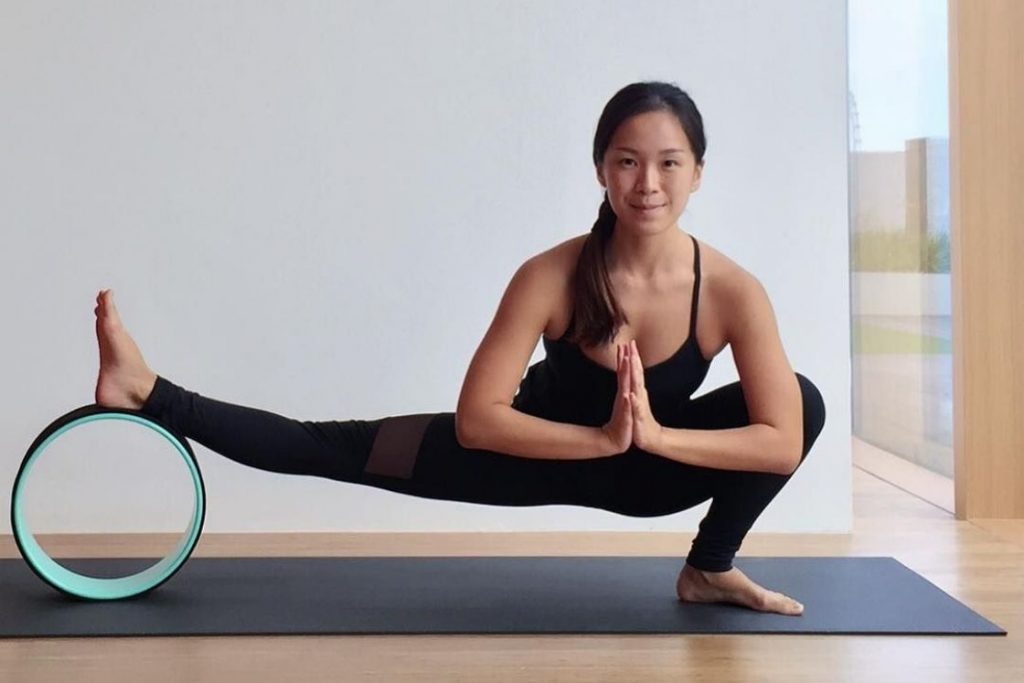
Ask any serious athlete in Singapore what their biggest performance limiter is and the answer is rarely strength or fitness. More often, it is recovery. The ability to train consistently, without interruption from tightness, minor injuries, or cumulative fatigue, is what separates those who progress steadily from those who plateau or get sidelined. In recent years, a growing number of runners, cyclists, gym-goers, and team sport athletes across the island have begun integrating the yoga wheel into their recovery toolkit, and the results are hard to argue with.
This article examines why the yoga wheel has earned a place in serious athletic recovery protocols, what the science says about its effectiveness, and how different types of athletes are using it to train harder and stay injury-free for longer.
The Recovery Gap in Singapore’s Fitness Culture
Singapore’s fitness culture is enthusiastic and increasingly sophisticated. The number of running events, cycling clubs, CrossFit boxes, and functional training facilities across the island reflects a population that takes physical activity seriously. Yet there is a notable gap between the intensity of training and the quality of recovery most athletes invest in.
Many athletes spend significant resources on training programmes, nutrition, and equipment, but treat recovery as an afterthought. Foam rolling is common but often performed hastily and without real technique. Stretching is frequently skipped in favour of getting more training volume in. Sleep, hydration, and active recovery sessions are often the first casualties of a busy Singapore schedule.
The consequences accumulate over time: chronic tightness in the hip flexors and hamstrings, restricted thoracic mobility that limits overhead movement and running posture, recurring minor strains that never fully resolve, and a gradual decline in training quality as the body struggles to absorb the workload being placed on it.
What the Yoga Wheel Offers That Standard Recovery Tools Do Not
Foam rollers, massage guns, resistance bands, and static stretching all have genuine value. But each has limitations that the yoga wheel addresses in ways that make it a uniquely complementary addition to any recovery toolkit.
Curved Surface Meets Curved Body
The human body is not flat. The spine has natural curves, the ribcage is rounded, the hip flexors run along a curved path from the lumbar spine to the femur. Standard foam rollers apply pressure along a flat cylindrical surface that makes point-of-contact work reasonably effective for the legs but quite awkward for the thoracic spine and anterior body.
The yoga wheel’s circular shape conforms to the natural curves of the spine and torso. When athletes use it for thoracic mobility work, the wheel fits the curve of the back rather than pressing against it in a flat, uncomfortable line. This makes the experience more comfortable and the mechanical effect more targeted.
Anterior Chain Access
Most standard recovery tools focus primarily on the posterior chain, the muscles along the back of the body. Foam rollers on the calves, hamstrings, glutes, and upper back are the typical routine. Yet for most athletes, the anterior chain is where significant tightness accumulates, particularly in the hip flexors, quadriceps, pectorals, and anterior shoulder complex.
These structures are notoriously difficult to release effectively with standard tools. The yoga wheel enables deep, sustained stretching of the entire anterior chain through supported backbend positions. A hip flexor stretch in a low lunge variation with the back foot elevated on the wheel is one of the most thorough hip flexor release positions available in any modality. Similarly, a chest opener over the wheel releases anterior shoulder and pectoral tightness that is extremely difficult to access through conventional stretching.
Sport-Specific Benefits
Different athletic disciplines create different patterns of tightness, imbalance, and injury risk. The yoga wheel addresses several of the most common sport-specific issues with notable effectiveness.
Runners
Runners in Singapore, whether training for the Singapore Marathon, weekend park runs, or trail races in Bukit Timah, share a predictable set of tightness patterns. Hip flexors shortened by the repetitive running gait and hours of sitting between training sessions. Hamstrings and calves in chronic states of fatigue and tightness. Thoracic spine stiffened into a forward-rounded posture that compromises arm swing and breathing efficiency.
The yoga wheel targets all three areas effectively. Hip flexor stretches using the wheel as a back foot support create a deeper, more sustained release than standard standing lunges. Rolling the thoracic spine over the wheel restores the extension mobility needed for efficient running posture and full respiratory capacity. Hamstring stretches supported by the wheel in seated or supine positions allow longer holds without the muscular effort of unsupported stretches.
Cyclists
Cyclists face perhaps the most pronounced anterior chain tightness of any athletic group. Hours in an aerodynamic position on the bike create extreme hip flexor shortening, thoracic kyphosis, and pectoral tightness that can persist long after the ride ends. Many cyclists experience neck and upper back pain not from the cycling itself but from the accumulated tension of maintaining a forward-flexed position for hours.
The yoga wheel is extraordinarily well suited to offsetting these cycling-specific patterns. The supported backbend over the wheel directly reverses the thoracic flexion of the cycling position. Hip flexor work with the wheel addresses one of the primary drivers of lower back pain in cyclists. Extended chest openers counteract the pectoral tightening that contributes to the rounded-shoulder posture cyclists are known for.
Gym Athletes and CrossFit Practitioners
Athletes who train with barbells, kettlebells, and bodyweight movements face their own set of mobility demands. Overhead pressing and squatting require significant thoracic extension and shoulder external rotation, both of which are compromised by tightness patterns common in gym athletes.
Yoga wheel backbends improve thoracic extension directly, translating to better overhead position in presses and snatch movements. Hip flexor work with the wheel improves squat depth and reduces lumbar compensation during heavy lower body work. The core activation required in many yoga wheel balance and stability poses builds the deep, stabilising core strength that protects the spine under load in ways that standard gym core exercises often do not adequately address.
Myofascial Release: How the Wheel Works on Connective Tissue
Much of the tightness that limits athletic performance and increases injury risk is not actually in the muscles themselves but in the fascia, the dense connective tissue that surrounds muscles, organs, and bones throughout the body. Fascia responds differently to pressure and stretch than muscle tissue does. It requires sustained, moderate pressure over a longer duration to release, rather than the brief, intense pressure that characterises aggressive massage.
The yoga wheel, when used with body weight and appropriate positioning, applies sustained pressure through curved surfaces to fascial planes that are difficult to access otherwise. The thoracolumbar fascia, a broad sheet of connective tissue across the lower back, responds particularly well to the movement of rolling the spine over the wheel. The hip flexor fascia releases with the sustained low lunge stretches the wheel enables. The anterior shoulder fascia softens under the gentle traction of a prolonged chest opener over the wheel.
Integrating the Yoga Wheel Into an Athletic Recovery Week
For most athletes, the yoga wheel is most effective as part of a structured recovery session rather than added haphazardly to the end of training. A dedicated thirty-minute session two to three times per week, on rest days or after less demanding training sessions, produces the most consistent results.
A practical framework for athletes might include:
- Five minutes of thoracic rolling and extension over the wheel
- Three minutes of supported fish pose for chest and anterior shoulder release
- Four minutes of hip flexor stretch on each side using the wheel as back foot elevation
- Three minutes of supported seated forward fold with the wheel in front for hamstring release
- Five minutes of passive chest opener with arms extended over the wheel
- Remaining time in constructive rest or light breathwork
This sequence systematically addresses the anterior chain tightness, thoracic restriction, and hip flexor shortening that limit most athletes regardless of their sport.
At Yoga Edition, yoga wheel classes are structured to accommodate a range of starting points, including athletes who are highly fit but relatively inflexible, and are taught with an understanding of the specific demands that training places on the body. Instructors guide participants through progressions that build mobility safely and sustainably, without the risk of pushing through tissue that is not yet ready to release.
Frequently Asked Questions
Q: How soon after a hard training session can I use the yoga wheel? A: Light, passive yoga wheel work focused on gentle chest opening and hip flexor release is appropriate even on the same day as a hard training session, particularly in the evening. More intensive wheel work involving active loading or deeper tissue pressure is better reserved for the following day when the acute post-exercise inflammation has subsided.
Q: Will using the yoga wheel make me less powerful as an athlete? A: This is a common concern based on older research suggesting that static stretching before training can reduce power output. Yoga wheel recovery sessions performed after training or on rest days have no negative effect on power or strength. Improved mobility and reduced tightness typically translate to better movement quality and reduced injury risk, both of which support performance over time.
Q: Can the yoga wheel help with IT band syndrome, a common running injury? A: IT band syndrome involves tightness and inflammation along the lateral thigh and is strongly associated with hip flexor and hip abductor imbalances. The yoga wheel can contribute to IT band syndrome management by releasing the hip flexors and improving hip mobility, which reduces the biomechanical patterns that stress the IT band. It should be used as part of a broader rehabilitation approach rather than as a standalone treatment.
Q: How is yoga wheel work different from using a foam roller for recovery? A: A foam roller applies compressive pressure primarily to the posterior chain and is most effective for muscles like the calves, hamstrings, glutes, and upper back. The yoga wheel enables both compressive and traction-based release, accesses the anterior chain through supported stretch positions, and allows for the longer-duration holds that produce genuine fascial release. The two tools complement each other well and are more effective used together than either one alone.
Q: Do I need to be flexible to start using a yoga wheel for athletic recovery? A: Not at all. The yoga wheel is specifically designed to make deep stretching positions accessible to people who do not yet have the flexibility to achieve them independently. Athletes who are strong but inflexible, which describes many gym-goers and cyclists, often find that the wheel unlocks positions they have never been able to reach before, making it particularly valuable for people whose flexibility has lagged behind their fitness.