

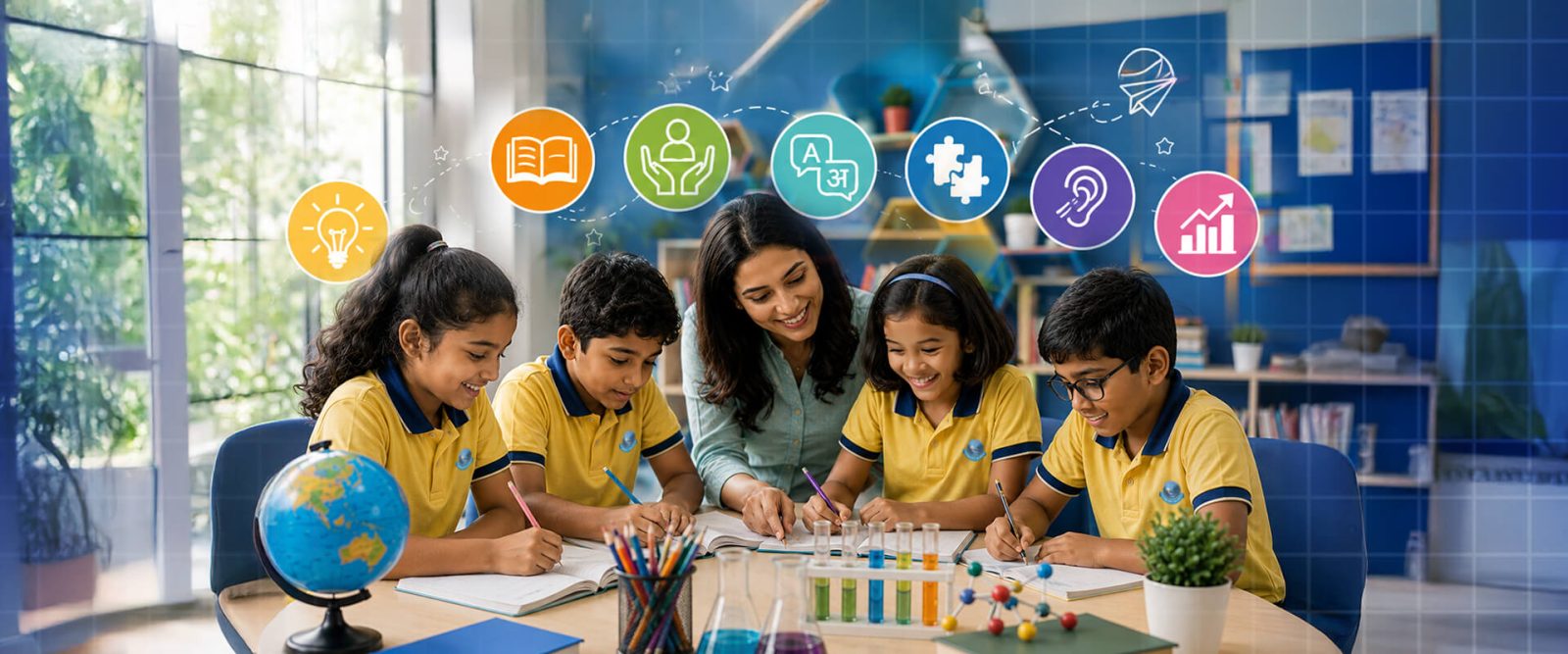
In an increasingly interconnected world, education goes beyond textbooks, examinations, and academic achievements. Students need to understand different cultures, respect diverse perspectives, and recognise their responsibilities towards society. Developing global awareness from an early age helps children become thoughtful individuals who can contribute positively to the world around them. Modern education plays an important role in preparing students to understand international issues while appreciating their own cultural identities.
IB schools in Mumbai follow an educational approach that encourages students to explore global perspectives, develop cultural understanding, and become responsible global citizens. Through inquiry-based learning, collaborative activities, and real-world experiences, the International Baccalaureate (IB) framework helps students understand how communities, cultures, and countries are connected. This approach builds curiosity, empathy, and the confidence to engage with different viewpoints.
1. Encouraging Cultural Understanding and Respect
One of the most important aspects of global awareness is understanding and appreciating cultural diversity. Students interact with people who may have different traditions, languages, beliefs, and lifestyles. Such exposure helps them recognise that differences are valuable and should be respected.
IB education encourages discussions about cultures, celebrations, historical events, and social practices from around the world. These learning experiences help children develop open-mindedness and avoid making assumptions about unfamiliar communities. They also learn to appreciate their own cultural backgrounds while respecting those of others.
2. Developing Critical Thinking Through Global Issues
Understanding global challenges requires students to look beyond immediate surroundings. Issues such as climate change, poverty, environmental protection, public health, and access to education affect communities worldwide.
The IB approach encourages learners to investigate these topics, ask meaningful questions, and explore possible solutions. Instead of simply memorising information, students examine different perspectives and understand the reasons behind complex problems.
This process develops critical thinking and helps students recognise how individual choices can influence society and the environment.
3. Promoting Inquiry-Based and Interdisciplinary Learning
Global awareness becomes more meaningful when students connect classroom concepts with real-world situations. Inquiry-based learning allows them to explore subjects through questions, research, discussions, and practical activities.
For example, a project about water conservation can combine science, geography, mathematics, and social studies. Students may investigate water shortages, compare conservation practices across countries, and suggest ways to reduce water wastage in their communities.
This interdisciplinary approach helps learners understand that global challenges are interconnected and often require solutions involving multiple areas of knowledge.
4. Building Empathy and Social Responsibility
Being globally aware also means understanding the experiences and challenges faced by other people. Empathy encourages students to consider different viewpoints and respond thoughtfully to social issues.
Community projects, volunteering activities, collaborative initiatives, and classroom discussions provide opportunities to understand the importance of helping others. Students learn about inclusion, equality, environmental responsibility, and community participation.
These experiences encourage children to become compassionate individuals who understand that their actions can create meaningful differences in society.
5. Strengthening Communication and Collaboration Skills
Effective communication is essential in a multicultural world. Students need to express their ideas clearly, listen to different opinions, and work constructively with people from diverse backgrounds.
IB learning environments encourage teamwork through group projects, presentations, discussions, and collaborative research. These activities help students develop confidence while learning to appreciate alternative viewpoints.
Such experiences also prepare them to participate in international academic environments and future professional settings where communication and teamwork are valuable skills.
6. Connecting Local Values with Global Perspectives
Global education does not require students to move away from their cultural roots. Instead, it helps them understand how local traditions, values, and experiences contribute to a broader global identity.
Students learn to appreciate their heritage while exploring international perspectives. This balance develops a sense of belonging, cultural confidence, and respect for diversity.
Conclusion
Global awareness is an essential part of preparing students for an interconnected future. Through cultural understanding, inquiry-based learning, critical thinking, empathy, and collaboration, IB education helps children develop the knowledge and attitudes needed to become responsible global citizens.
For parents exploring IB schools in Mumbai, understanding how the curriculum encourages international perspectives can help them make informed educational decisions. A learning environment that combines academic development with cultural awareness and social responsibility gives students the confidence to embrace diversity, understand global challenges, and contribute positively to an ever-changing world.